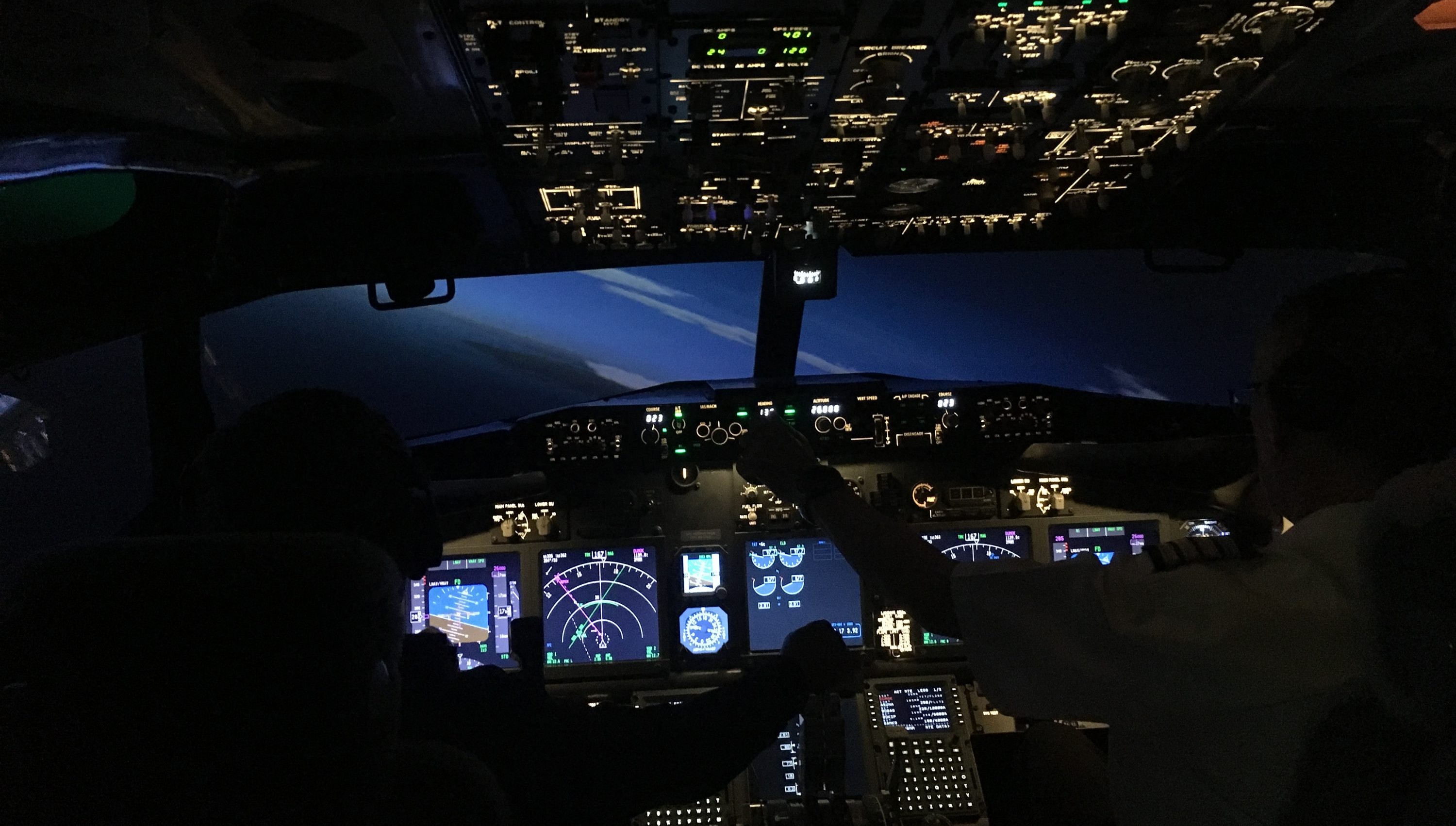
As covered in The New ATPL Flight Test, for many years to obtain an ATPL it was sufficient to complete all seven exams and meet the minimum aeronautical experience requirements. Since 2014, there are several additional requirements, namely to complete an approved course of multi-crew cooperation training as well as to pass an ATPL Flight Test.
The ATPL flight test assesses the applicant’s competencies as pilot-in-command of a multi-crew operation. It is conducted as an IFR operation in a multi-engine turbine powered aeroplane (normally a simulator) operated with a co-pilot.
What the rules actually say
The MCC requirement is woven through CASR Part 61 in three places worth knowing. First, regulation 61.700 lists a completed, approved MCC course among the requirements for the grant of an ATPL — alongside the exams, the experience and the flight test. Second, for any pilot applying for a type rating on a multi-crew aircraft on or after 1 September 2015, an approved MCC course must also have been completed — which is why the certificate matters whether your next aircraft is an EMB-120, a BE1900 or an A320. Third, and less well known: regulation 61.510 extends the same logic all the way down to private pilots, who may only exercise licence privileges in a multi-crew operation after MCC training. The message from the regulator is consistent — operating as a crew is a distinct, trainable skill set, and nobody gets to skip it.
The training standard itself sits in the Part 61 Manual of Standards (Appendix B.3), which pairs an aeronautical knowledge component — the ATPL Human Factors syllabus — with a practical unit of competency called MCO: manage flight during multi-crew operations. Notably, the Australian standard is competency-based rather than hours-based: unlike Europe, there is no fixed minimum simulator hourage in the rule, and it is the training organisation’s approved course — and your demonstrated competency — that earns the certificate.
Peter Chin — Aviation Australia
To help gain some insight into the MCC course, Peter Chin, an airline veteran with many years’ experience with Qantas and Emirates, explains what’s involved in the course he currently delivers in Perth:
The MCC course requires the student to have a CPL and instrument rating. Also, the student will have passed the ATPL Human Factors exam.
The course is spread over 7 continuous days and involves two days of ground school and five days of simulator flying. The two days of ground school cover threat and error management, standard operating procedures (SOPs), pilot duties and responsibilities. Five days of simulator sessions give each student 4 hours per day operating as both pilot flying (PF) and pilot monitoring (PM) for a total of 20 hours.
Students will learn how to use the Boeing SOPs for all of the flight regimes on a typical airline flight as PF and PM. Briefings, communication and situational awareness skills will be gradually developed during the five simulator days. Students will also learn how to program and use the flight management computer (FMC) and operate the aircraft using the auto flight systems.
During these sessions, the students will be exposed to the use of normal and non-normal checklists. Basic non-normal scenarios are introduced allowing both PF and PM to use procedures to resolve the problem.
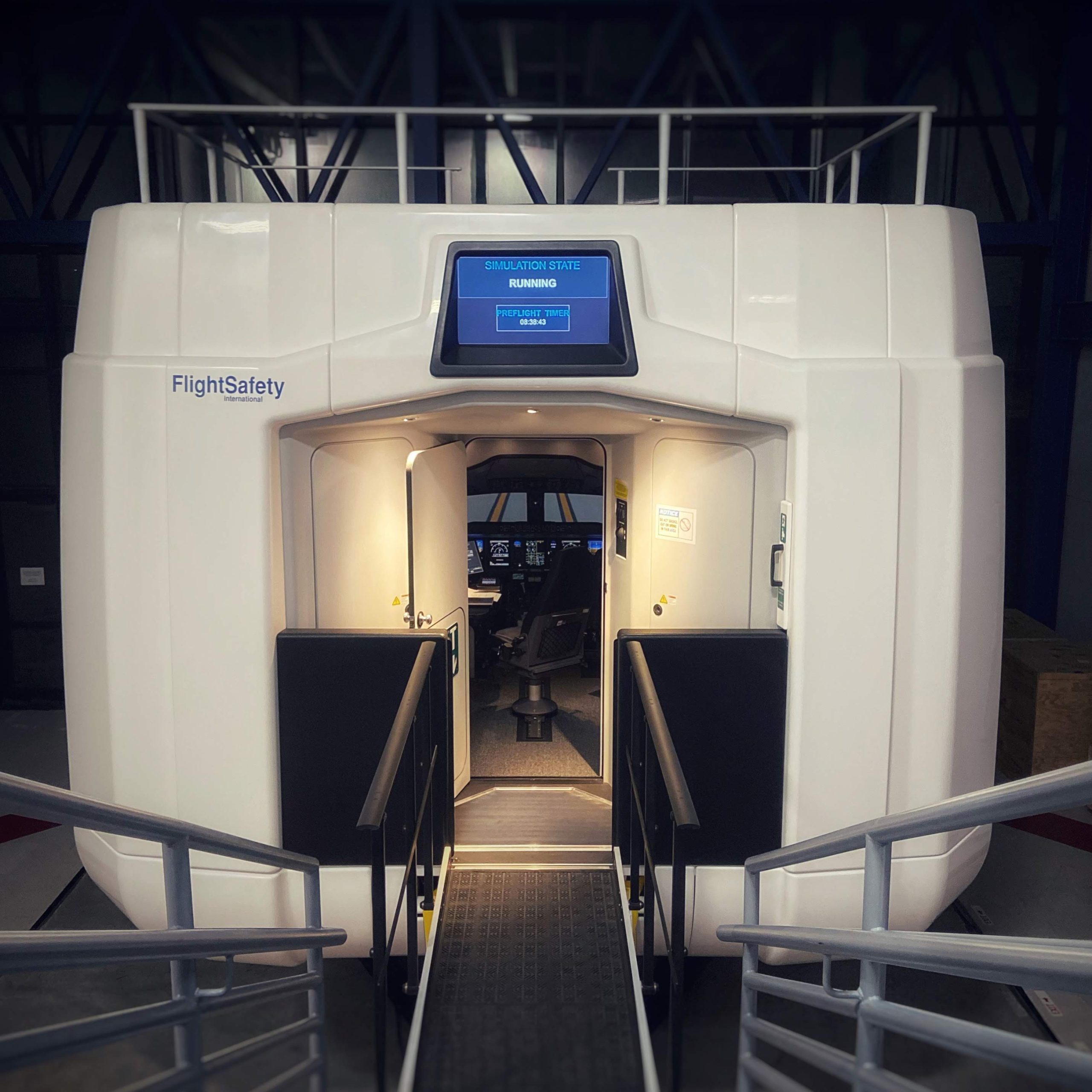
Peter Chin currently delivers the MCC course at the B737 simulator centre in the Perth CBD in conjunction with Aviation Australia. They also offer a range of B737 packages for pilots (loggable as Cat B simulator), including familiarisation or recency flights.
What the course is really teaching you
It’s tempting to see the MCC as a box to tick between the ATPL exams and the flight test. Airlines see it differently: it’s the week where a single-pilot aviator learns to stop being a soloist. The habits it installs are exactly the ones airline recruitment sims and training departments assess.
The heart of it is the PF/PM division of labour. As pilot flying you learn to fly and manage the flight path — and to verbalise: state intentions, call for checklists, command configuration changes rather than just doing them. As pilot monitoring you learn the harder discipline: actively cross-checking the flight path, making the standard callouts, catching deviations early, and speaking up — clearly and without apology — when something isn’t right. Around that core the course layers the machinery of airline flying: structured departure and approach briefings; the checklist philosophy that separates normal, memory and QRH non-normal procedures; automation mode awareness and FMC management; threat and error management applied by a crew rather than an individual; workload distribution when things get busy; and positive handover of control. None of it is difficult in isolation. Doing all of it, consistently, while flying a jet-category simulator accurately — that’s the course.
The world scene: MCC, JOC and the APS MCC
Australian readers eyeing Europe should know the same certificate has evolved differently under EASA. The baseline European MCC prescribes minimums — 25 hours of theory and 20 hours of simulator. On top of that grew the unregulated “Jet Orientation Course” (JOC), of wildly variable quality. Then, in 2017, EASA formalised the APS MCC — Airline Pilot Standard MCC — a combined, enhanced course of at least 40 simulator hours, created after training data showed alarming numbers of freshly qualified CPL/ME-IR graduates failing their initial airline assessments. The APS MCC is now widely favoured by European carriers — Ryanair has called it the gold standard for entry-level training — and any Australian planning to convert to an EASA licence and compete for European jobs should budget for the APS version rather than the minimum. At home, the competency-based CASA course remains the requirement; but the trend it represents is global, and it’s the same one driving Australian airline sim assessments: airlines want crew behaviours, not just handling, demonstrated before day one.
Choosing a course in Australia
The market has grown well beyond a single option, and courses differ more than their certificates suggest. Names to research: Aviation Australia (B737NG, delivered in Perth with Peter Chin as above); Revesco Aviation in Perth, which runs an intensive course on a Boeing 777-200 simulator and advertises a healthy discount — over $1,100 each — for pilots who book as a pair; CAE Melbourne; Ansett Aviation Training in Melbourne with its full-flight simulator fleet; and Aviation Theory Services in Perth, which runs small-group courses. Sydney pilots can also train on the 737 at Flight Experience.
When comparing, ask about the things that change the outcome rather than the certificate. What device is it — a full-flight simulator or a fixed-base trainer, and is time loggable? Who instructs — current or former airline training captains bring the SOP culture the course exists to teach. Is the course flown in pairs with a real crew partner throughout (it should be — monitoring an equally green colleague is where the learning lives)? Which SOP set does it use — Boeing or Airbus — and does that match where you’re heading? And can it be packaged with your ATPL flight test — several organisations run the MCC and the test in the same simulator with the same SOPs, which is the most efficient way to arrive at test day already fluent in the aircraft and the callouts.
On timing: do the course when you can use it. The skills are perishable, so an MCC flown years before your first multi-crew job fades — the sweet spot is shortly before your ATPL flight test, a multi-crew type rating, or an airline application that lists the certificate (Virgin Australia’s regional E190 operation, for instance, has listed an MCC certificate among its entry requirements). And prepare before you arrive: know your instrument scan cold, review jet transition theory from your ATPL notes, and chair-fly the standard callouts your provider sends out — the pilots who struggle in MCC week are rarely short on aptitude, just on preparation.
Further reading
- CASA — Multi-crew cooperation training requirements
- Aviation Australia — MCC course (B737NG)
- Revesco Aviation — MCC course, Perth (B777 simulator)
- CAE Melbourne — MCC course
- Ansett Aviation Training — Melbourne simulator centre
- Aviation Theory Services — MCC course, Perth
- Wings Alliance — APS MCC vs MCC vs MCC/JOC explained
- FlightDeckFriend — APS MCC course comparison
Written by David Roses in 2022; updated July 2026. Course availability, content and pricing change — confirm details directly with providers and check current requirements with CASA. Not sponsored by any interested parties.